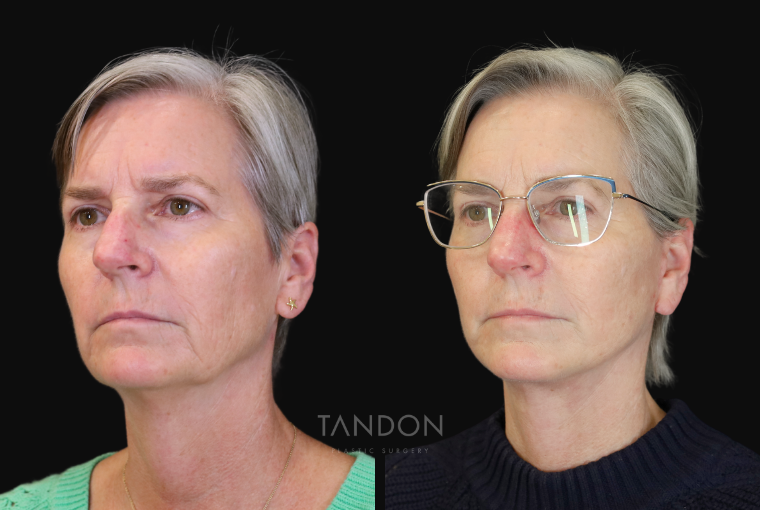
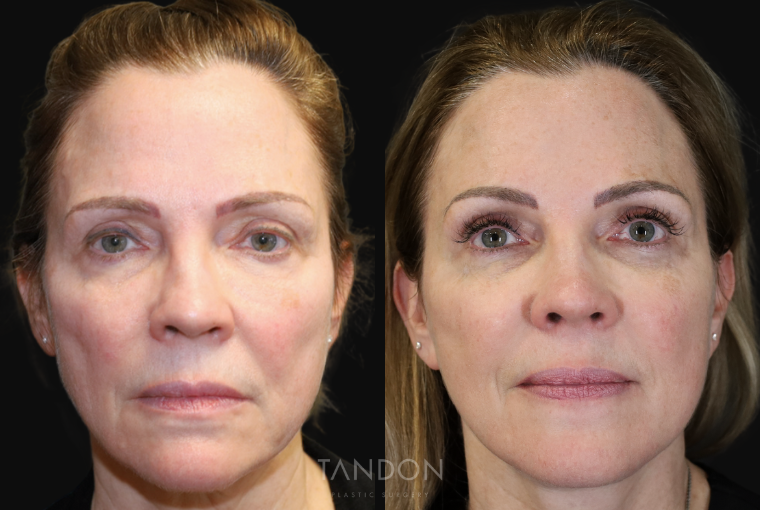
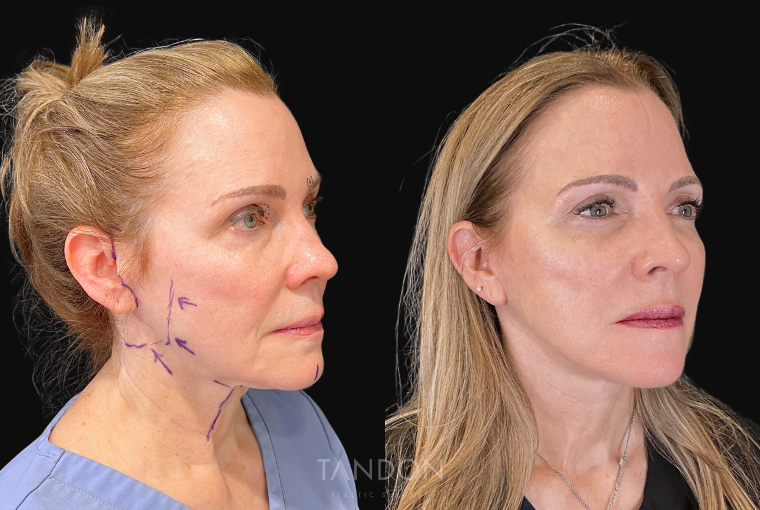
Understanding Modern Facelift Options in Boston
Facial rejuvenation continues to rise in popularity as more patients explore treatments that restore youthful contours while maintaining a natural and refined appearance. Boston patients often seek enhancements that align with a professional, active lifestyle and prefer results that refresh the face without creating an obvious or overdone look. Modern facelift techniques make it possible to address aging in a way that is subtle, precise, and long-lasting. Dr. Vickram Jay Tandon, MD, FACS, a board-certified plastic surgeon, offers two advanced facelift techniques, the deep plane facelift and the mini facelift. Each is tailored to different degrees of facial aging and can create elegant results that preserve facial identity.
What a Facelift Can Improve
As the face ages, changes appear gradually in the form of jowls, sagging skin, soft tissue descent, and less defined jawline contours. These changes often lead patients to feel that their external appearance no longer reflects the energy or confidence they feel internally. A facelift addresses aging by repositioning deeper facial layers, smoothing transitions between the midface and jawline, and restoring structure in a way that looks natural. Rather than pulling the skin tightly, modern facelifts focus on lifting the deeper tissues that have shifted over time. This approach maintains facial expression and softness while creating a refreshed and well-balanced appearance.
Common Concerns Among Facelift Patients
Many individuals considering facial rejuvenation share similar concerns. Patients often worry about visible scarring, extended recovery time, or results that appear overly tight. Others wonder whether they are choosing the correct technique for their degree of aging. Boston patients frequently prefer subtle, sophisticated outcomes and want assurance that their appearance will remain authentic. Dr. Tandon addresses these concerns during consultation by explaining expected results, reviewing facial anatomy, and outlining which technique is most appropriate for each patient’s needs.
Deep Plane Facelift Overview
The deep plane facelift is widely regarded as one of the most advanced and effective facelift options available. This technique works beneath the superficial musculoaponeurotic system layer to release deeper retaining ligaments and lift the cheeks and midface with greater mobility. Because the deep structures are repositioned rather than relying on tension at the skin surface, the results appear smooth and natural. The deep plane facelift is ideal for patients with more pronounced facial aging, including deeper nasolabial folds, midface descent, or significant jowling. It restores youthful cheek position, softens folds around the mouth, and enhances jawline definition in a way that maintains spontaneous facial expression. Patients who choose this technique often appreciate its longevity and its ability to create transformative but natural changes.
Mini Facelift Overview
The mini facelift is a less extensive option designed for patients with early to moderate signs of aging. It focuses on improving the lower face by tightening underlying tissues through shorter incisions and a more targeted approach. This option works well for individuals who have mild jowls or slight loss of jawline definition, but are not yet ready for a full deep plane facelift. Because it is less invasive, the mini facelift typically offers a quicker recovery period. It provides a subtle refresh that enhances facial contours without significantly altering appearance. Many Boston patients prefer this technique when they desire visible improvement while maintaining a natural look and minimal downtime.
How Dr. Tandon Customizes Each Facelift
Every facelift begins with a detailed evaluation of facial structure, aging patterns, skin elasticity, and the overall balance between facial features. Dr. Tandon examines the jawline, midface, neck, and underlying support structures to determine how tissues have shifted over time. During consultation, he explains how aging affects each area and discusses what each surgical technique can realistically accomplish. This individualized planning allows him to select the approach that best enhances overall harmony while preserving facial identity. Some patients benefit from combining a facelift with additional procedures such as eyelid surgery or skin resurfacing to address surrounding features, although these are evaluated on a case-by-case basis. The goal is always a balanced and natural-looking outcome.
What to Expect During Recovery
Recovery varies depending on whether a patient undergoes a deep plane facelift or a mini facelift. Swelling and bruising are common in the first week, with mini facelift patients often returning to light activities within one to two weeks. Deep plane facelift patients typically resume most normal routines within two to three weeks. While the majority of visible swelling fades during this time, gradual refinement continues as tissues settle and incisions fade over several months. Dr. Tandon provides detailed aftercare instructions to support the healing process. These guidelines often include elevating the head during rest, avoiding strenuous activity in the early stages, and practicing consistent sun protection to maintain results. Patients are encouraged to stay hydrated and follow all recommendations closely to ensure a smooth recovery.
Expected Results and Longevity
A successful facelift should create a refreshed version of the patient without altering their natural character. After healing, most individuals notice a smoother jawline, improved neck contour, and corrected jowling. Those who undergo a deep plane facelift typically see additional improvement in the midface, where the cheeks appear lifted and youthful fullness is restored. Results from a deep plane facelift tend to last longer than those of a mini facelift due to the technique used on deeper structures. However, both approaches offer meaningful rejuvenation when applied to the right candidate. Over time, the aging process continues naturally, but the face will appear more youthful than it would have without surgery.
Ideal Candidates for a Facelift
Ideal facelift candidates are healthy adults experiencing visible facial aging who want to restore smoother and more youthful contours. Patients should have realistic expectations, stable medical health, and a willingness to follow postoperative guidelines. Those with mild aging changes may find the mini facelift to be an ideal choice, while individuals with more advanced sagging or descent often achieve the best results with the deep plane facelift. Certain factors, such as previous facial surgery, asymmetry, or medical considerations, may require further evaluation but do not necessarily disqualify someone from undergoing treatment.
Why Boston Patients Choose Dr. Vickram Jay Tandon
Dr. Vickram Jay Tandon is known for his meticulous surgical technique, thoughtful planning, and commitment to natural-looking results. His expertise in both deep plane and mini facelift techniques allows him to design highly personalized treatment plans centered on facial harmony. Patients trust his refined aesthetic judgment and value his approach to care, which emphasizes subtle enhancement rather than dramatic alteration. Dr. Tandon’s dedication to delivering long-lasting outcomes has made him a sought-after provider for facial rejuvenation in Boston.
Taking the Next Step
A facelift is a meaningful decision that can greatly enhance confidence and facial balance. Patients considering facial rejuvenation are encouraged to schedule a consultation with Dr. Tandon to explore available options, ask questions, and receive a personalized assessment. With the right approach, a facelift can provide refreshed contours, renewed confidence, and a natural appearance that aligns beautifully with individual features.