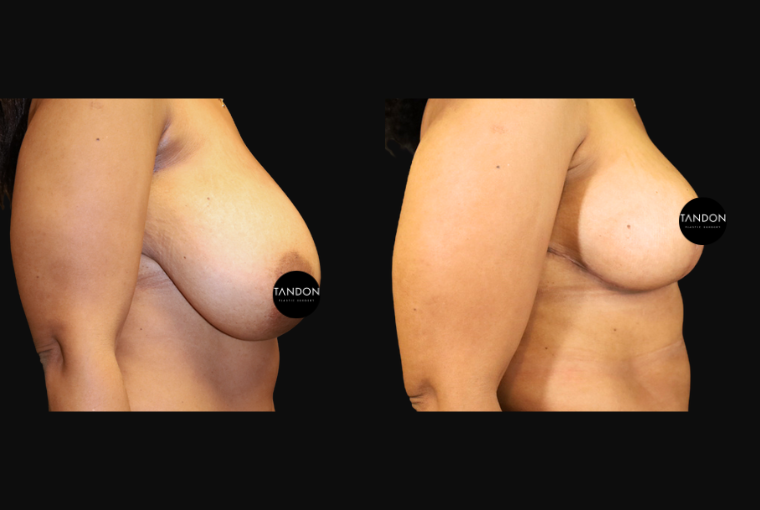
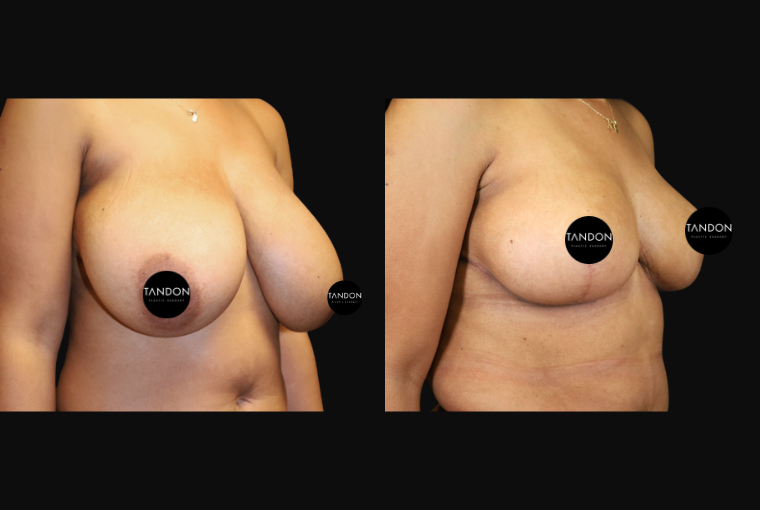
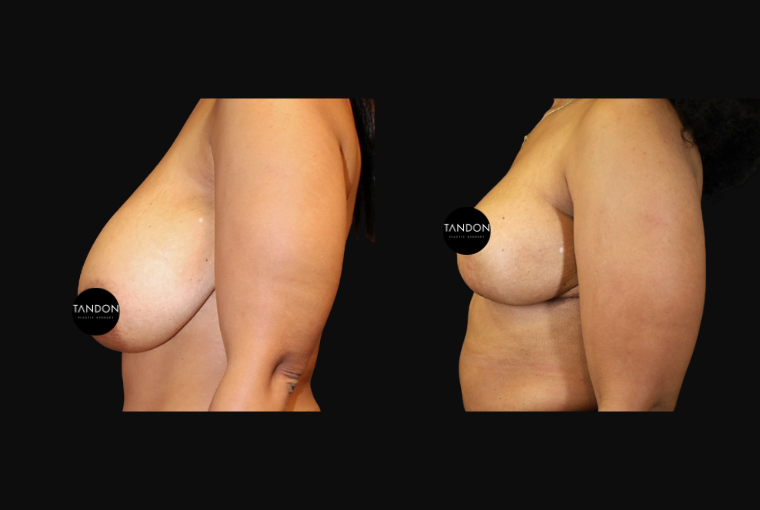
For women living with overly large breasts, the physical and emotional toll can be profound. Chronic neck and back pain, shoulder grooves from bra straps, skin irritation beneath the breast fold, difficulty exercising, and a wardrobe dictated by necessity rather than preference, these are daily realities that many women have simply accepted as their lot. But they don’t have to be.
Breast reduction surgery, also known as reduction mammaplasty, is one of the most consistently life-improving procedures in all of plastic surgery. At Tandon Plastic Surgery in Boston, Dr. Vickram Tandon performs breast reduction with a focus on achieving results that are not only aesthetically beautiful but functionally transformative; addressing the physical burden of macromastia while creating a natural, proportionate outcome that the patient can be proud of.
This guide walks you through everything you can expect before and after breast reduction surgery, from your initial consultation through your full recovery.
Understanding Breast Reduction Surgery
Breast reduction surgery removes excess breast tissue, fat, and skin to reduce the size of the breasts and improve their shape and position. In most cases, the nipple and areola are also repositioned to a more natural height on the breast mound, and the areola may be reduced in size.
The procedure addresses not just the aesthetic concern of overly large breasts but the genuine medical burden they create. Insurance coverage for breast reduction is available in many cases when the patient can demonstrate that the procedure is medically necessary due to physical symptoms; something the team at Tandon Plastic Surgery can help you navigate.
Before Surgery: Your Consultation and Preparation
The Initial Consultation
Your breast reduction journey at Tandon Plastic Surgery begins with a thorough, unhurried consultation with Dr. Vickram Tandon. During this appointment, he will:
- Review your medical history and current symptoms
- Perform a physical examination of the breasts
- Discuss your aesthetic goals and expectations
- Explain the surgical techniques he recommends for your anatomy
- Review before-and-after photographs of similar cases
- Discuss risks, recovery, and expected outcomes
- Answer all of your questions
This consultation is the foundation of a successful outcome. Dr. Tandon believes that patients who are well-informed and have realistic expectations consistently experience greater satisfaction with their results. Don’t hold back any questions, no concern is too small.
Choosing Your Size and Goal
One of the most important conversations during your consultation involves your post-operative size goal. Unlike breast augmentation, where cup size can be predicted with reasonable precision, breast reduction results are expressed in terms of how many grams of tissue will be removed and what final size and shape will be aesthetically most appropriate for your frame.
Dr. Tandon will guide this conversation based on your body proportions, your physical symptoms, and your personal preferences. The goal is to create a result that feels natural and proportionate, breasts that suit your body rather than overwhelm it.
Pre-Surgical Requirements
In the weeks leading up to your surgery, you will be given detailed pre-operative instructions. Standard requirements typically include:
- Medical clearance from your primary care physician if indicated
- Baseline mammogram if you are of appropriate age or have clinical indications
- Quitting smoking at least four to six weeks before surgery (smoking significantly impairs healing and increases complication risk)
- Stopping blood-thinning medications and supplements as directed
- Arranging for a trusted adult to drive you to and from surgery and stay with you for the first 24 to 48 hours
- Preparing your recovery space at home
What to Prepare at Home Before Surgery
Setting up your home for recovery in advance makes the post-operative period significantly more comfortable. Before your surgery date, consider:
- Stocking up on easy-to-prepare, nutritious foods
- Having loose, front-opening tops and button-down shirts ready (nothing pulled over the head)
- Setting up a comfortable reclining sleep area; many patients find sleeping slightly elevated more comfortable initially
- Filling your prescriptions in advance
- Arranging help with childcare, pet care, and household tasks for the first week
The Day of Surgery
Breast reduction is performed under general anesthesia and typically takes two to four hours, depending on the complexity of the procedure and the amount of tissue to be removed. You will arrive at the surgical facility approximately one to two hours before your scheduled surgery time.
After the procedure, you’ll recover in the post-anesthesia care unit until you are alert and your vital signs are stable. Most patients go home the same day, though in some cases an overnight stay may be recommended. You will not be able to drive yourself home.
After Surgery: The Recovery Journey
The First 48 Hours
The first two days after breast reduction are typically the most uncomfortable part of recovery. You will wake from surgery with surgical drains in place, a post-surgical bra, and dressings over your incisions. Expect to feel groggy, sore, and tired.
Prescribed pain medication should keep discomfort manageable. Most patients describe the sensation as tightness and soreness rather than sharp pain. Rest is essential during this period. Limit activity to gentle walking around the house to promote circulation.
The First Two Weeks
Swelling and bruising are normal after breast reduction. Your breasts will not look like their final result during this period, they will be swollen, higher on the chest than they will ultimately sit, and the shape will continue to evolve for months.
Most patients take one to two weeks off work, with return to sedentary or desk work possible at the earlier end of that timeline. You’ll need to avoid lifting anything heavier than a gallon of milk and refrain from raising your arms above shoulder height for the first two weeks.
Dr. Tandon’s team will see you for a follow-up appointment within the first week to assess healing, remove drains if present, and answer any questions.
Weeks Three Through Six
By the third week, most patients are feeling significantly better. Energy returns, discomfort diminishes to occasional tenderness, and many women begin to appreciate the improved ease of movement that comes with smaller, lighter breasts. Activities can progressively expand during this period, though exercise restrictions continue typically until at least six weeks post-operatively.
Scars are red, raised, and prominent during this period. This is normal, scars always look their worst in the first few months before they begin to mature and fade.
Three to Twelve Months: The Revealing of Results
The most dramatic phase of post-operative change happens between three and twelve months after surgery. Swelling fully resolves, the breasts descend to their natural position, and the final shape becomes clear. For most women, this phase is profoundly gratifying, the results they saw in their mind’s eye begin to match what they see in the mirror.
Scars continue to mature throughout this period, transitioning from red and raised to flatter, lighter, and much less noticeable. Scar management including silicone sheeting, scar creams, and sun protection can further improve the final appearance of incision lines.
Life After Breast Reduction
The most consistent feedback from breast reduction patients is that the procedure changed their lives in ways they hadn’t fully anticipated. Common reports include:
- Complete or significant relief from neck, back, and shoulder pain
- The ability to exercise comfortably for the first time in years
- A dramatically expanded wardrobe and improved confidence in clothing
- Improved posture
- Relief from skin irritation and rashes beneath the breasts
- A lighter, freer physical experience of everyday life
Patient satisfaction rates for breast reduction are among the highest of any elective plastic surgery procedure, and this is borne out in the consistent outcomes achieved at Tandon Plastic Surgery.
Choosing Dr. Vickram Tandon for Your Breast Reduction in Boston
Dr. Vickram Tandon is a board-certified plastic surgeon committed to the highest standards of surgical excellence and patient care. His approach to breast reduction is tailored to each patient’s unique anatomy, symptoms, and goals with results designed to be natural, proportionate, and transformative.
If you’re ready to explore whether breast reduction surgery is right for you, contact Tandon Plastic Surgery in Boston to schedule your consultation. Take the first step toward the relief and confidence you deserve.