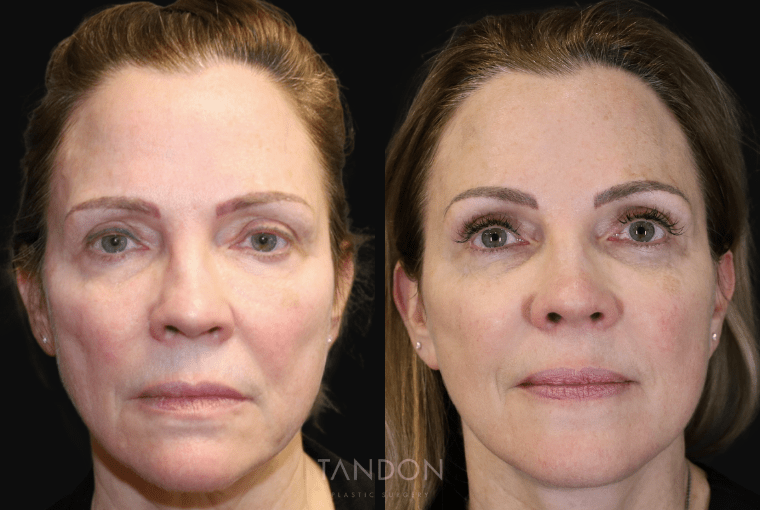
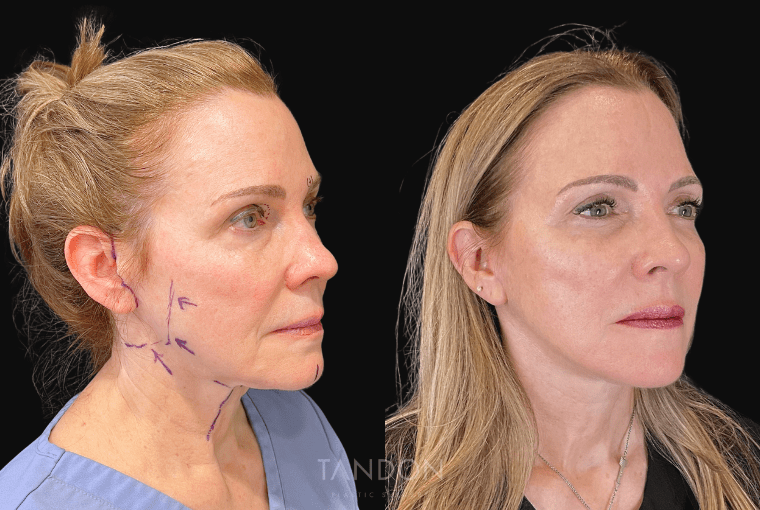
Facial aging rarely happens in just one place. The cheeks begin to descend, the folds beside the nose and mouth deepen, the jawline softens into jowls, and the neck gradually loses its crisp angle, often all within the same decade. Many patients who come to Tandon Plastic Surgery in Boston have already tried to address these changes one area at a time, with filler in the cheeks, a neuromodulator for lines, or a device treatment for mild laxity. When those measures stop keeping pace, the question becomes whether a single, well-planned surgical approach could address the face as a connected whole. For the right patient, a deep plane facelift may offer that kind of comprehensive, balanced rejuvenation.
What a Deep Plane Facelift Is and Why the Layer Matters
Every facelift technique works on the same basic anatomy, but each technique chooses a different layer to lift. Beneath the skin and fat lies the superficial musculoaponeurotic system, or SMAS, a sheet of fibrous tissue that supports the soft tissues of the cheek, jaw, and neck. Firm retaining ligaments tether this layer to deeper structures, and over time the tissues held by those ligaments descend and loosen. A skin-only lift pulls on the surface, while many traditional SMAS techniques fold or tighten the supportive layer without fully releasing it.
A deep plane facelift works beneath the SMAS. Dr. Vickram Tandon releases the key retaining ligaments and lifts the skin, fat, and SMAS together as a single, well-vascularized unit. Because the deeper tissues carry the lift, the skin can be redraped with minimal tension, which may help avoid a tight, wind-swept appearance and support incisions that heal more discreetly. The release also allows the mid-face to be repositioned in a way that surface tightening cannot easily reproduce, which is why the technique is often considered for patients whose concerns extend from the cheekbones down to the jawline.
It is worth clarifying what comprehensive means in this context. It does not mean dramatic or overdone. At Tandon Plastic Surgery, we use the word to describe a plan that treats the mid-face, lower face, and jawline together so that no one area looks refreshed while its neighbor still looks tired. You can read an overview of the procedure on our deep plane facelift page.
Common Concerns That Lead Patients to Consider a More Comprehensive Approach
Most patients do not arrive asking for a specific technique. They describe what they see in the mirror, and those descriptions tend to follow recognizable patterns. Understanding the pattern helps our surgical team decide whether a deep plane facelift, a more limited procedure, or a non-surgical plan is the most appropriate recommendation.
Mid-Face Descent and Deepening Folds
One of the most common concerns is a hollowing below the eyes combined with heavier folds around the mouth. As the cheek fat pads descend, the upper cheek can look flat while the lower cheek gathers volume near the nasolabial folds. Filler can soften this pattern for a period of time, but when the underlying descent is significant, adding volume alone may make the lower face appear fuller rather than lifted. Repositioning the mid-face tissues addresses the cause of the fold rather than only its depth.
Jowls and a Blurred Jawline
A clean jawline is one of the features the eye reads first when judging age. Once jowls form, the transition between the face and the neck becomes less distinct, and many patients find this is the change that bothers them most in photographs. Because the deep plane approach lifts the tissues above the jawline along a natural vector, it may help restore a smoother, more continuous contour from the ear toward the chin.
Neck Laxity and Banding
Facial aging and neck aging are closely linked, and treating one without the other can create a mismatch. Loose neck skin, vertical platysmal bands, and fullness beneath the chin often accompany jowling. Dr. Tandon serves as Associate Editor for a textbook focused on rejuvenation of the neck, and our team pays careful attention to how the face and neck will look together once healing is complete.
Concerns After Earlier Treatments
Some patients have already had a facelift years ago, or have used filler extensively, and feel their results no longer look natural. Others worry about looking different from themselves, a concern we take seriously. Individual anatomy, skin quality, ethnicity, and personal preference all shape what a natural result means for a given person, and our consultations begin with listening rather than prescribing.
How Our Surgical Team Customizes a Deep Plane Facelift
At Tandon Plastic Surgery, our Signature approach to facial rejuvenation is built on the principle that the least invasive plan capable of meeting a patient’s goals is usually the right one. Dr. Tandon completed his Aesthetic Surgery Fellowship at Beth Israel Deaconess Medical Center, Harvard Medical School, after serving as Chief Resident at the University of Michigan, and he has been invited to speak at national and international conferences, including presentations on a facelift technique. Our surgical team brings that training to a detailed, anatomy-first assessment of each face.
Assessing Where the Aging Is Happening
During consultation, Dr. Tandon evaluates bone structure, the position of the cheek fat, the depth of the folds, skin thickness and elasticity, the jawline, and the neck. He also considers facial symmetry and how the face moves during expression. This assessment determines whether a deep plane facelift is warranted or whether a preservation facelift, a mini facelift, or a non-surgical plan may be more fitting. Not every patient with jowls needs a deep plane procedure, and recommending one when a smaller operation would suffice is not consistent with our approach.
What the Evidence Suggests About Safety and Mid-Face Results
Patients often ask whether a deeper dissection means greater risk. The published evidence is reassuring, although it continues to evolve. A 2026 systematic review and meta-analysis by Koroma and colleagues in Aesthetic Plastic Surgery, pooling 45 studies and more than 10,000 deep plane facelift patients, reported an overall complication rate of 6.6 percent, with temporary facial nerve weakness in about 1.2 percent and no instances of permanent facial nerve injury among the included studies. A 2025 meta-analysis by Vayalapra and colleagues in the Annals of Plastic Surgery found that SMAS and deep plane techniques had comparable safety profiles, and noted that the limited direct comparative data suggested an advantage for deep plane techniques in mid-face rejuvenation. Earlier work by Jacono, Alemi, and Russell in the Aesthetic Surgery Journal (2019) found that the risk of permanent nerve injury did not differ among SMAS facelift techniques, while identifying a modestly higher rate of major hematoma with the deep plane approach. These findings reinforce why careful surgical technique, blood pressure control, and close follow-up matter.
Candidacy and When Another Option May Be Better
A deep plane facelift is most often considered for adults with moderate to advanced mid-face and lower-face aging who are in good general health and who want a long-lasting, natural-looking result. Patients should be non-smokers, or willing to stop well before and after surgery, since nicotine compromises blood flow to healing tissues. Uncontrolled high blood pressure, certain bleeding disorders, blood-thinning medications that cannot be safely paused, and poorly controlled diabetes may increase risk and require careful medical evaluation or a different plan. Patients with early, mild laxity may be better served by a less extensive procedure, and those whose primary concern is skin texture rather than descent may benefit more from resurfacing. We also discuss motivations and expectations openly, because a comprehensive surgery should be a considered personal decision rather than a response to outside pressure.
Combining Procedures for Balanced, Comprehensive Results
A deep plane facelift addresses the mid-face, jowls, and jawline, but it does not treat every area of the face. For many patients, the most harmonious result comes from pairing it with a small number of complementary procedures performed during the same anesthetic. Combining procedures thoughtfully can reduce the number of separate recoveries, though it may lengthen the operation and the initial healing period, which we weigh carefully for each patient.
The Neck
A neck lift is one of the most common companions to a deep plane facelift. Depending on anatomy, this may involve tightening the platysma muscle, addressing banding, and refining the area beneath the chin so that the jawline and neck read as one continuous contour. Dr. Tandon also evaluates whether fullness beneath the chin is best addressed with liposuction, muscle tightening, or both, since the right combination depends on individual anatomy.
The Eyes and Brow
Because a deep plane facelift lifts the mid-face toward the lower eyelid, it can soften the lid-cheek junction, but it does not remove excess upper-lid skin or treat under-eye bags. Patients with these concerns may consider eyelid surgery or a brow lift in the same session, which helps the upper face match the refreshed lower face. Addressing these areas together can prevent the eyes from appearing tired next to a newly lifted mid-face and jawline.
Skin Quality
Surgery repositions tissue, but it does not change the texture, fine lines, or pigmentation of the skin itself. Resurfacing, such as CO2 laser resurfacing, may be staged or combined to address skin quality. A 2026 systematic review and meta-analysis by Wen and colleagues in the Aesthetic Surgery Journal, including 17 studies and 1,361 patients, found that simultaneous facelift and laser resurfacing was associated with high patient satisfaction and low complication rates when laser settings were adjusted for areas that had been surgically undermined. This is one reason our surgical team individualizes laser energy and treatment zones rather than applying a single protocol.
What to Expect From Recovery and Results
A deep plane facelift is typically performed under general anesthesia or intravenous sedation in an accredited surgical facility, and the operation may take several hours depending on whether additional procedures are included. Dr. Tandon places incisions within natural contours around the ear and hairline so that they tend to fade and remain discreet as they mature. Most patients go home the same day with a responsible adult, and detailed written instructions accompany every discharge.
The First Two Weeks
Swelling, bruising, and a sensation of tightness are expected in the first several days, often peaking around day two or three. Patients sleep with the head elevated, keep activity light, and attend scheduled follow-up visits, including an early check to monitor healing. Many people feel comfortable at home and on video calls within the first week or two, although visible bruising may still be present.
Returning to Routine
Many patients feel ready for social activities after about two to three weeks, and strenuous exercise is usually resumed gradually with Dr. Tandon’s clearance. Numbness around the cheeks and ears is common and generally improves over several months. Subtle swelling can persist longer than patients expect, and the face continues to settle and soften for several months after surgery.
Realistic Long-Term Outcomes
A deep plane facelift may help create a smoother mid-face, a more defined jawline, and a softer transition into the neck while preserving natural expression. Results are often long-lasting, but the face continues to age, and sun protection, a healthy lifestyle, stable weight, and good skin care can help sustain the improvement. Viewing examples in our before-and-after gallery can help patients form realistic expectations about what surgery may achieve for their own anatomy.
Why Boston Patients Choose Tandon Plastic Surgery
Choosing a surgeon for facial rejuvenation is ultimately about trust, training, and aesthetic judgment. Dr. Vickram Jay Tandon, MD, FACS, is a board-certified plastic surgeon who also serves as a part-time Lecturer of Otolaryngology, Head and Neck Surgery at Harvard Medical School, a Physician and Surgeon at Beth Israel Deaconess Medical Center, and Medical Director of the Ambulatory Surgery Center at the Boston Center for Plastic Surgery. His education includes U.C. Berkeley and The Warren Alpert Medical School of Brown University, and he has authored more than 20 peer-reviewed articles and book chapters focusing on rhinoplasty, facelift, and neck lift surgery. You can learn more about his background on our About Dr. Tandon page.
Beyond credentials, our surgical team values integrity, candor, and natural results. Dr. Tandon personally guides each patient from the first consultation through recovery, and he recommends only the procedures that align with a patient’s goals in the safest and most minimal way possible. Tandon Plastic Surgery welcomes patients at our Newbury Street office in Boston as well as our Chestnut Hill and Norwood locations, and we regularly care for patients who travel to Boston from across New England and beyond.
Schedule a Deep Plane Facelift Consultation in Boston
If you have noticed changes across your cheeks, jawline, and neck and are wondering whether a comprehensive approach could restore balance, a consultation is the best way to find out. Dr. Tandon will evaluate your facial anatomy, listen carefully to your goals, and explain whether a deep plane facelift, a more limited procedure, or a non-surgical plan may suit you best. We offer both in-person and virtual consultations, and our team will walk you through recovery, risks, and a personalized treatment plan so that you can make a well-informed decision. We invite you to contact Tandon Plastic Surgery to schedule your visit with Dr. Tandon and our surgical team.