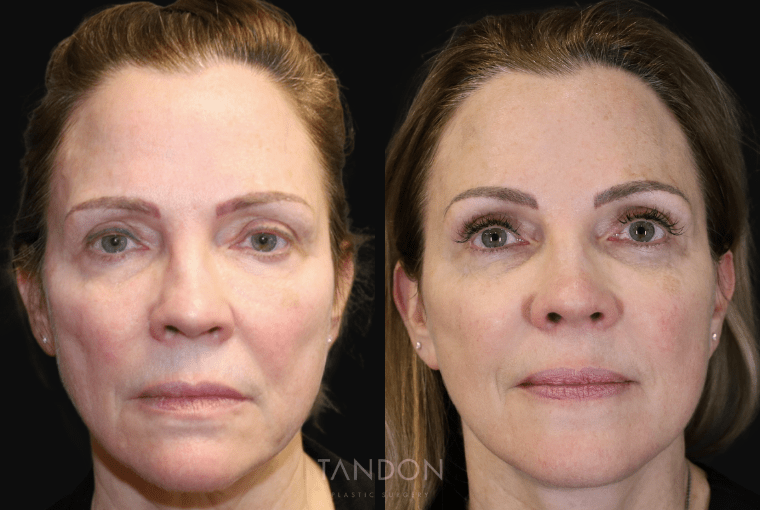
The word “facelift” has long carried associations of dramatic transformation, lengthy recovery, and an obvious surgical result. For many patients, this perception has been a barrier to seeking treatment even when they clearly could benefit from it. Fortunately, the evolution of surgical technique has produced a middle-ground solution that is changing this narrative: the mini facelift.
At Tandon Plastic Surgery in Boston, Dr. Vickram Tandon offers the mini facelift as an elegant, less invasive alternative to traditional facelift surgery, one that delivers genuine, lasting rejuvenation with a significantly shorter recovery and a more limited surgical footprint.
If you’ve been noticing early jowling, loose skin along the jawline, or a general loss of definition in the lower face and are wondering whether you’re “ready” for a facelift, the mini facelift may be exactly the answer you’ve been looking for.
What Is a Mini Mid-Face Facelift?
A mini facelift, also known as a limited-incision facelift, short-scar facelift, or “weekend facelift,” is a surgical procedure that addresses early to moderate facial aging using smaller incisions than those required in a traditional facelift. The procedure focuses primarily on the lower face: the jawline, jowls, and lower cheeks.
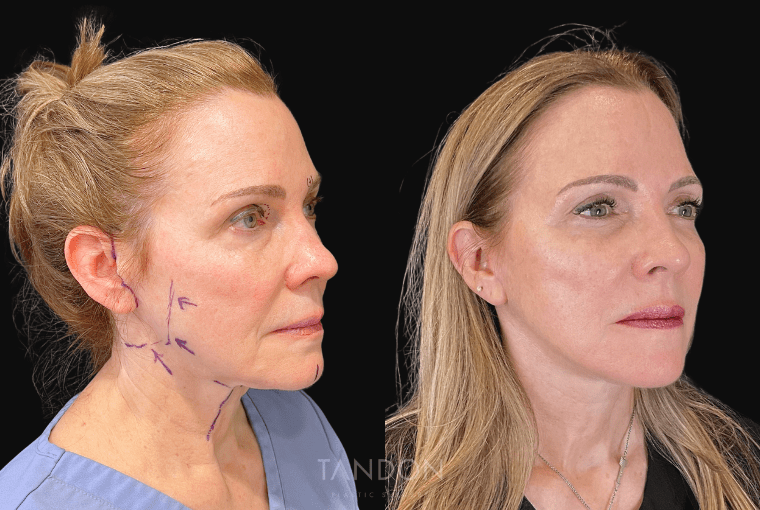
While a traditional facelift involves incisions that extend into the hairline and often beneath the chin, a mini facelift uses shorter incisions typically located around the ear. Through these limited access points, Dr. Tandon can tighten the underlying facial tissues (the SMAS, superficial musculoaponeurotic system), remove a modest amount of excess skin, and redrape the remaining skin for a smoother, more youthful contour. The result is a refreshed, naturally younger-looking appearance in the lower face without the telltale signs of an overly pulled or wind-swept surgical result.
Who Is a Good Candidate for a Mini Mid-Face Facelift?
The mini facelift is ideally suited for patients who are experiencing the early stages of facial aging and want surgical results, but who don’t yet have the degree of tissue descent or skin laxity that would require a full facelift. In general, ideal candidates are:
- In their late 30s to early 50s (though age is less important than anatomy)
- Experiencing early jowling or mild to moderate loosening of skin along the jawline
- Bothered by early marionette lines or the beginning of a “bulldog” appearance
- In generally good health with no contraindications to surgery
- Non-smokers, or willing to quit smoking for the required period before and after surgery
- Realistic in their expectations and understanding that results are natural, not dramatic
Patients with more advanced facial aging; significant excess skin, deep tissue descent throughout the face, or concerns extending to the neck may be better served by a traditional facelift or a combination of procedures.
How Does a Mini Mid-Face Facelift Differ from a Traditional Facelift?
Understanding the differences between a mini facelift and a traditional facelift helps patients choose the right procedure for their stage of aging and their goals.
Incision size and location: A traditional facelift involves longer incisions that extend into the temporal hairline, around the ear, and often beneath the chin. A mini facelift uses shorter incisions typically confined to the area around the ear, resulting in less visible scarring.
Tissue manipulation: Both procedures address the SMAS layer beneath the skin. However, a traditional facelift allows more extensive tissue repositioning, making it better suited for more advanced laxity. A mini facelift provides effective correction of early to moderate changes but has limitations with severe laxity.
Scope of correction: A traditional facelift can address the full face and neck comprehensively. The mini facelift primarily targets the lower face and early jowling, with limited benefit to the neck or upper face.
Recovery time: This is where the mini facelift offers a meaningful advantage. Traditional facelift recovery typically involves two to three weeks of significant social downtime. Mini facelift patients often return to light activities within five to seven days and feel comfortable in most social settings within ten days to two weeks.
Anesthesia: Traditional facelifts are typically performed under general anesthesia. Mini facelifts can often be performed under local anesthesia with sedation, which reduces anesthesia-related risks and recovery time.
The Mini Facelift Procedure at Tandon Plastic Surgery
At Tandon Plastic Surgery, the mini facelift begins with Dr. Tandon marking the incision sites around the ear in the pre-operative area. The procedure is then performed with meticulous attention to both technical precision and the artistic goal of natural-looking rejuvenation.
Through the short incisions, Dr. Tandon accesses the SMAS layer, which is carefully tightened and repositioned. The overlying skin is then re-draped without tension, which is the key to avoiding the “pulled” look that characterizes poorly executed facelifts, and the small amount of excess skin is removed. Incisions are closed with fine sutures designed to minimize visible scarring.
Recovery After a Mini Facelift
One of the most compelling advantages of the mini facelift is its abbreviated recovery timeline, which is why the procedure is sometimes informally referred to as the “weekend facelift,” though Dr. Tandon cautions against taking this nickname too literally.
Days one through three: Patients typically experience swelling, bruising, and some tightness immediately following surgery. Pain is generally mild to moderate and well-controlled with prescribed medication. Rest at home with head elevation is recommended during this period.
Days four through seven: Many patients feel comfortable leaving the house for brief outings during this period. Sutures or staples may be removed toward the end of the first week. Most swelling and bruising remain but begin to visibly improve.
One to two weeks post-surgery: A significant percentage of patients feel comfortable returning to work (desk jobs or remote work) by 10 to 14 days. Social situations may require a bit more time depending on how prominently any remaining bruising shows.
Three to six weeks: Most swelling has resolved, and the final results begin to become clearly visible. Incisions continue to heal and will fade considerably over the following months.
Combining the Mini Facelift with Other Procedures
A mini facelift is often most powerful when performed in combination with complementary procedures that address concerns the facelift cannot correct. Common combination approaches at Tandon Plastic Surgery include:
Upper or lower eyelid surgery (blepharoplasty): The mini facelift addresses the lower face, while blepharoplasty refreshes the upper and lower eyelids together, these procedures can comprehensively rejuvenate the face.
Fat grafting or filler: Volume restoration in the cheeks, temples, and lips complements the lifting achieved by the mini facelift, creating a more complete rejuvenation.
Brow lift: For patients with brow descent contributing to a tired or heavy appearance, a brow lift alongside the mini facelift can extend correction to the upper face.
Laser resurfacing or chemical peels: Improving skin texture, tone, and fine lines enhances the overall quality of the mini facelift result.
The Natural Results of Dr. Tandon’s Approach
What distinguishes a truly exceptional facelift result from an obvious one is the naturalness of the outcome. Dr. Vickram Tandon’s philosophy centers on results that look like the patient at their best: well-rested, refreshed, and youthful, but unambiguously themselves. This requires not just technical surgical skill but an artistic understanding of facial anatomy and aging; how tissue should sit, how light interacts with facial contours, and how to achieve movement and expression that remains entirely natural after surgery.
His patients in Boston consistently report satisfaction not just with how they look, but with the fact that others notice they look better without being able to identify why.
Is a Mini Facelift Right for You?
The best way to determine whether a mini facelift is the right procedure for your anatomy and goals is through a personal consultation with Dr. Tandon. He will assess your degree of facial aging, discuss your concerns and objectives, and recommend the approach, whether mini facelift, traditional facelift, or a combination of non-surgical treatments that will best serve you. Contact Tandon Plastic Surgery in Boston today to schedule your consultation and take the first step toward a refreshed, youthful appearance that’s entirely, authentically you.